The conversation about China’s global engagement usually revolves around infrastructure, trade routes, geopolitics, and investment figures. Connectivity is measured in ports, railways, logistics, and industrial parks.
Yet in eastern China’s Zhejiang Province, one of the most interesting recent international cooperation stories began not with a megaproject, but with wooden bridges.
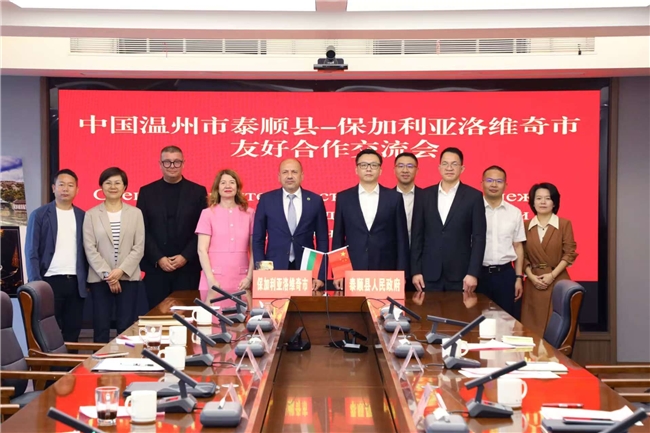
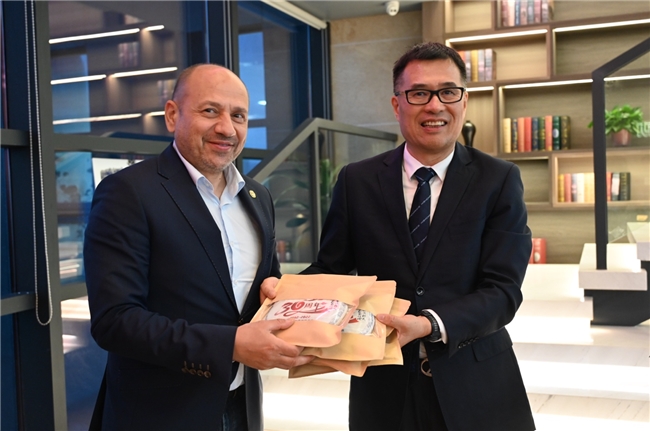
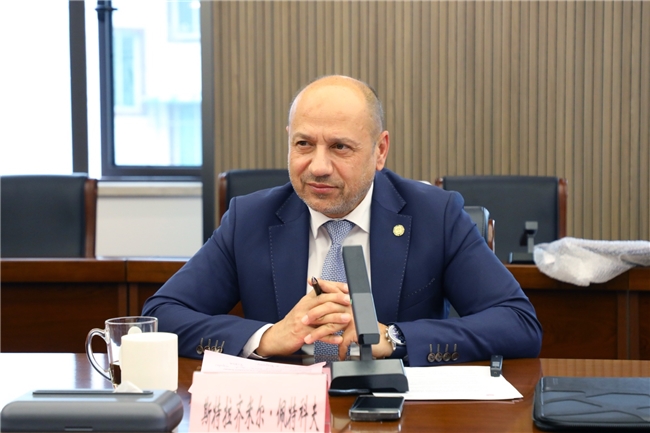
In May 2026, a delegation led by Stratsimir Petkov, Mayor of the Bulgarian city of Lovech, visited Taishun County in Zhejiang Province for a five-day program of cultural exchange, institutional meetings, business discussions, and tourism exploration. During the visit, the two sides formally signed a friendship and exchange agreement, opening a new chapter in local-level China-Europe cooperation.
At first glance, the connection seems unlikely.
Lovech is a historic Bulgarian city associated with Bulgaria’s National Revival period. Taishun is a mountainous county in southern Zhejiang, best known in China for its ancient covered wooden bridges. The two places are separated by more than 8,000 kilometers and belong to very different political, cultural, and historical environments.
But they share something unusually specific: both are “bridge cities.”
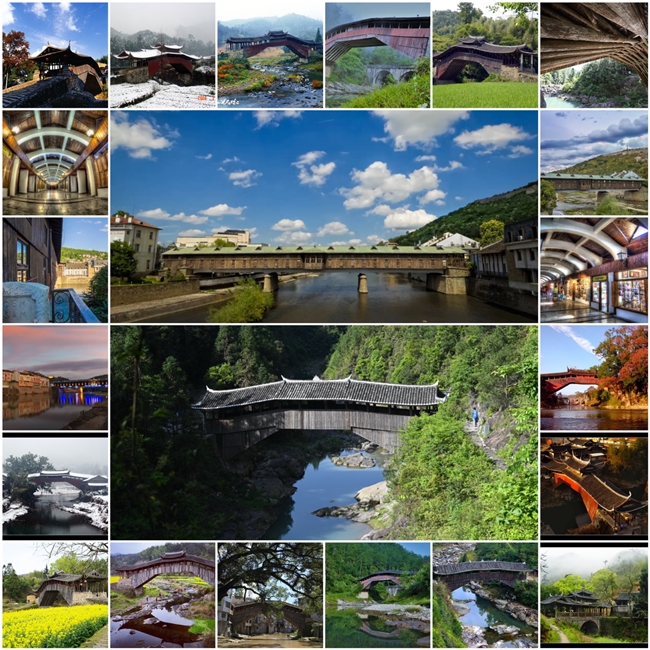
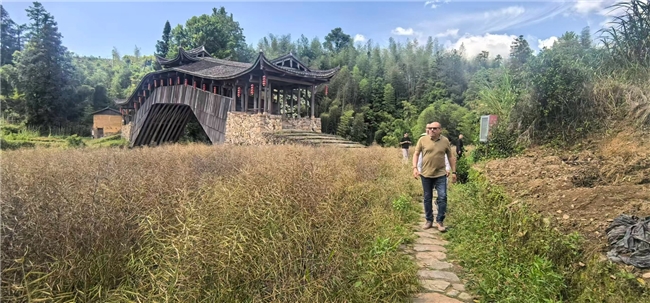
Lovech is home to the famous Covered Bridge, at one point designed by renowned Bulgarian architect Kolyu Ficheto, considered one of Bulgaria’s most recognizable architectural landmarks and the only covered bridge of its kind in Eastern Europe. Taishun, meanwhile, is internationally known for its 32 ancient wooden arch bridges, some over a thousand years old, which are now recognized as part of UNESCO’s Intangible Cultural Heritage.
That shared “bridge culture” became the foundation for a broader cooperation platform connecting tourism, higher education, cultural heritage, agriculture, wellness products, student exchange, and international business networking.
Importantly, the project did not emerge from central government planning. It evolved through cooperation between universities, cultural organizations, legal professionals, entrepreneurs, local officials, and students.
For years, discussions of China-Europe engagement have often focused on large-scale political frameworks and infrastructure projects. Those initiatives can produce results sometimes, but they are also highly exposed to geopolitical tensions, policy shifts, and economic uncertainty.
The Taishun-Lovech initiative reflects something more practical and arguably more sustainable: bottom-up internationalization.
Instead of beginning with an envisioned large-scale project, it began with a shared story that both sides could immediately understand.
“Covered Bridges Going Global”
What started as discussions about bridge culture soon evolved into conversations about tourism routes, university cooperation, agricultural branding, livestream commerce, student exchanges, and local business development.
A public moment came during the “International Covered Bridge Night” reception held on May 14, jointly organized by Wenzhou-Kean University, the Wenzhou Covered Bridge Culture Society, and HighChance Law Firm. The event brought together government representatives, business leaders, academics, students, media organizations, and cultural institutions from both countries.
Among the speakers was Dr. Cary Anderson, Vice Chancellor of Wenzhou-Kean University, who emphasized that universities often function as international bridges themselves, creating long-term people-to-people relationships that later develop into broader institutional partnerships.
Representatives from Taishun discussed the county’s bridge heritage and tourism development strategy, while Bulgarian participants introduced Lovech’s architectural history and future international ambitions. Business representatives explored cooperation opportunities in manufacturing, branding, fashion, tourism products, and regional promotion.
One of the evening’s strongest themes was that successful international cooperation increasingly depends not only on governments, but also on universities, civil society, businesses, and local communities working together.
The Wenzhou-Kean University Factor
A substantial portion of the coordination behind the initiative was carried out through Wenzhou-Kean University and its Law & Business Center. That is not accidental: as one of China’s only three Sino-American universities, WKU itself is the product of a long-term partnership between Zhejiang Province and the U.S. state of New Jersey. In many ways, the university serves as a living example of how regional cooperation can evolve into a durable international platform.
Faculty, students, and international teams at the university participated in proposal development, presentations, bilingual communication, media outreach, tourism positioning, and coordination between Bulgarian and Chinese stakeholders. The university has also helped organize multilingual media campaigns, AI video competitions, and international promotional initiatives focused on Taishun’s bridge culture.
One particularly symbolic moment occurred in early 2025, when a model of a Taishun covered bridge was donated to the Bulgarian Academy of Sciences through a collaboration involving the WKU Law and Business Center. Participants later described that gesture as the catalyst that eventually led to the Lovech delegation’s visit to China.
Lawyer and Director of the WKU Law and Business Center Asen Velinov worked together with WKU students and international faculty on project development, coordination, and presentations tied to the initiative. Students themselves became active contributors, proposing ideas related to tourism branding, social media strategy, bilingual storytelling, international marketing, and product positioning.
That student participation is more important than it might initially appear.
Many universities speak abstractly about “global engagement.” Here, students were directly involved in building an actual international cooperation project in real time, interacting with local governments, businesses, and foreign delegations. That creates a very different educational experience from simply discussing globalization in a classroom PowerPoint.
Beyond Symbolism
One reason the initiative attracted attention is that discussions moved unusually quickly beyond symbolism.
Participants explored tourism promotion campaigns, university exchange programs, livestream e-commerce projects targeting Chinese social media platforms, cultural festivals, agricultural cooperation, and co-branded consumer products.
Some proposals are highly practical. Others are deliberately experimental.
One concept involved a limited-edition tea product combining Bulgarian rose petals with Taishun’s locally famous “San Bei Xiang” green tea. Other discussions focused on bridge-themed souvenirs, wellness products, honey, cultural storytelling campaigns, and student-led design competitions.
The larger idea was straightforward: cultural heritage should not exist only as something preserved behind glass. It should also function as intellectual property, tourism infrastructure, and international branding material.
That logic is already familiar in China.
One of the most commercially interesting meetings during the visit took place at Yiming, one of Zhejiang’s best-known dairy and food companies. Discussions focused on the extraordinary success of “Momchilovtsi” yogurt, the Chinese dairy brand inspired by Bulgarian yogurt traditions and named after the Bulgarian village of Momchilovtsi. Over the past decade, the product has become one of the most recognizable examples of Bulgarian cultural branding in China, transforming an obscure Balkan village into a widely known name among Chinese consumers. Participants discussed whether similar models could emerge around Taishun and Lovech through tourism products, wellness branding, tea and rose collaborations, honey, cultural storytelling, and other locally rooted consumer products that combine authenticity, narrative, and regional identity.
The broader question now is also whether the cultural “cliches” associated with Bulgaria in China – yogurt and roses still have untapped potential.

China’s Search for “Hidden Europe”
The timing may also be favorable.
Chinese tourism has evolved. China is still the largest source of international travelers – and they are increasingly interested not only in Paris, London, and Rome, but also in smaller, visually distinctive destinations with strong local identity and compelling stories. On Chinese social media platforms, “hidden Europe” content performs particularly well: medieval towns, unusual architecture, abandoned socialist monuments, handcrafted aesthetics, and places that feel authentic rather than over-commercialized.
Lovech fits many of those patterns surprisingly well: its covered bridge is indeed visually distinctive, historically layered, highly photogenic, and immediately understandable within Chinese internet culture, where recognizable imagery and concise storytelling matter enormously.
In other words, the city naturally possesses something many tourism boards spend years trying to manufacture: a memorable narrative hook.
A Different Kind of Bridge Diplomacy
Perhaps the most interesting aspect of the Taishun-Lovech partnership is what it suggests about the future of international cooperation itself.
The initiative did not rely on massive budgets or geopolitical strategy. It relied on narrative, trust, institutional coordination, and a shared cultural reference point that both sides could naturally understand.
That may sound softer than traditional infrastructure diplomacy, but in practice it can be surprisingly durable.
The metaphor embedded in the bridges themselves is difficult to ignore. Taishun’s ancient wooden bridges were built without nails or heavy metal reinforcement. Their stability depends on balance, precise placement, and the relationship between interconnected parts.
Successful international cooperation often works the same way.
It rarely functions well when imposed mechanically from above. It becomes sustainable when universities, businesses, communities, cultural institutions, and local governments gradually find their place within a shared structure.
During the visit, a special video message from Liu Wanting, the 2025 Miss World China representative, expressed support for the growing partnership between Lovech and Taishun and encouraged Chinese audiences to discover Bulgaria beyond familiar stereotypes. Her remarks emphasized that cultural bridges between people frequently become bridges for tourism, education, business, and long-term friendship as well.
This may ultimately be the most important part of the story: not simply that two places signed an agreement, but that two distant regions discovered they already shared a common language.
-----
Photos: Zhong Xiaobo, Georgi Likiov